Tuftobot
A robotic tufting system optimized for Alpine coarse wool
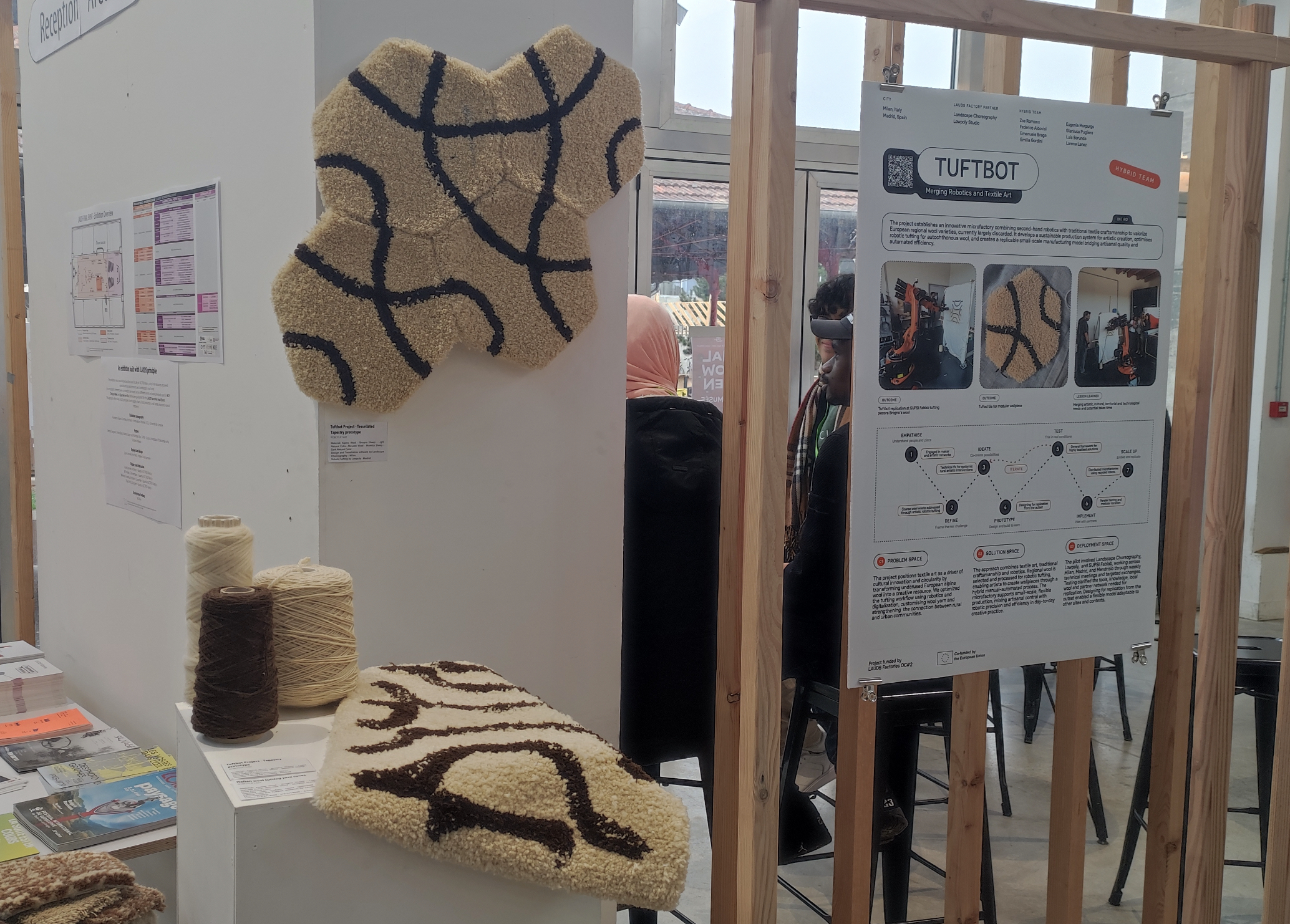
TuftBot project brings together Landscape Choreography and LowPoly Studio in a strategic collaboration combining artistic research, sustainable cultural practice, and advanced digital fabrication to develop a robotic tufting system optimized for Alpine coarse wool, transforming discarded regional fibers into high-value design and artistic textiles. By integrating traditional craftsmanship with adaptive robotics, the project promotes sustainable material valorization, circular economy principles, and innovative mid-tech textile production It builds upon prior collaboration on technical validation of a robotic tufting system, which demonstrated the feasibility of processing coarse Alpine wool using robotics. The project addresses the structural limitations of conventional textile industries, which rely on standardized imported wool and exclude diverse regional fibers, resulting in large quantities of discarded raw wool.
Input materials
Ingredients
In01_Robot-Hardware.md you can find all the information on the hardware needed to replicate the Tuftbot. In some cases you will find the links to the online shops where we acquired the components, for the custom made pieces you will find the 3D models that you will be able to further customise to your needs and 3D print.
In 02_Robot-Software.md you can find the links to the software we developed, links to the plug in we used and a explanation, piece by piece, of the grasshopper file we developed.
In 03_Tufting-equipment.md you can find a description of the tufting tools we opted for. One of the goal was to experiment with biobased and biodegradable materials. Like in other repositories you will find the link to the shops where we sourced our materials.
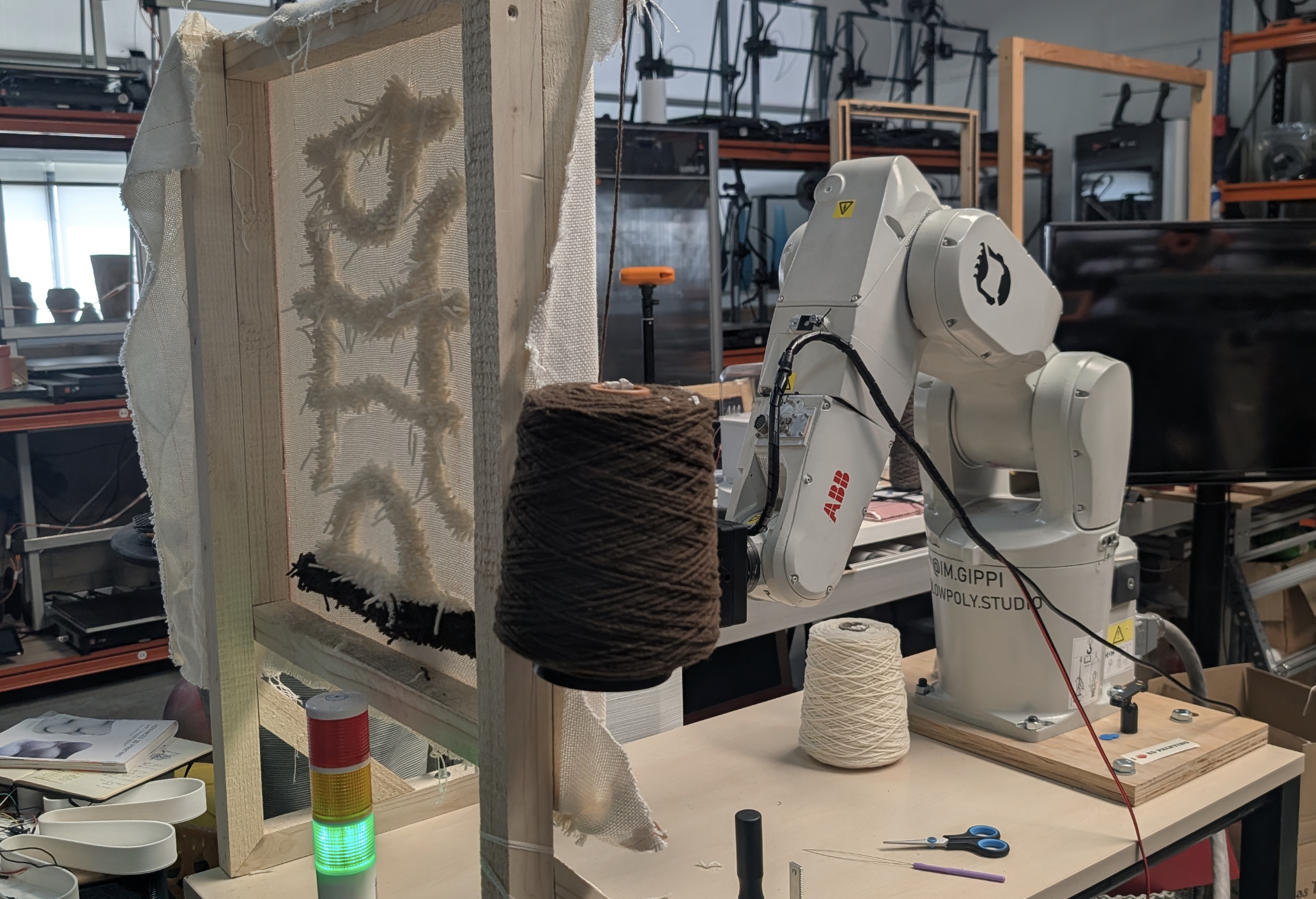
In 04_Comparing_two_set_up.md you can find a description of the two set up we experimented with. One in Madrid at Lowpoly studio using an ABB IRB1200 and one at SUPSI Fablab in Medrisio using a KUKA KR6/16/20-3.
In 05_Production_Workflow.md you can find a step by step description of the workflow, from an image to the robot tufting process.
In 06_Native_coarse_wool.md you can find a description of our research into native wool varieties, why is important for the project and the specifics of the yarns we developed.
In 07_Tiles_generator.md you can find a description of the tiles generator we developed and link its Html file.
In 08_Tests_and_iterations.md you can find a brief description of the evolution of the project, from first samples to final products. We chose to share this so it might help you in the adjustment that your specific replication project will require.
How to
Gallery