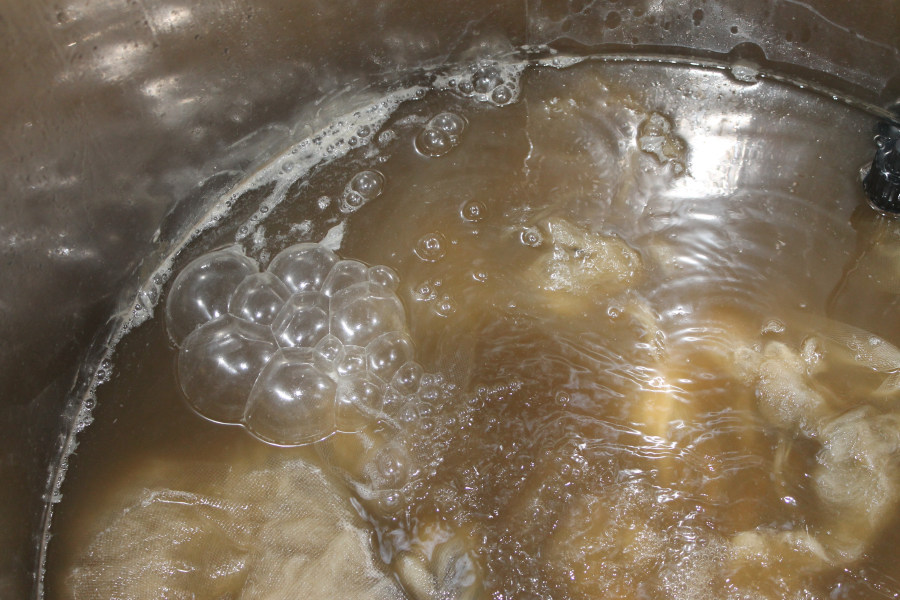
Suint Fermentation Method
A bio-scouring method requiring only rain water
Suint fermentation is a pre-industrial wool washing method based on the natural properties of raw fleece. It uses the suint (dried sheep sweat rich in potassium salts) together with naturally occurring microorganisms to create a mild alkaline washing bath without adding external detergents.
When raw wool is submerged in water, the suint dissolves and through fermentation, develops soap-like properties that help break down dirt and impurities. At the same time, anaerobic bacteria contribute to decomposing organic matter present in the fleece.
The result is a low-energy, water-efficient cleaning process, avoids the use of chemicals, and allows the bath to be reused multiple times and eventually repurposed as a natural fertilizer.
Input materials
- pH strips (optional)
- Gloves and mask (optional)
Ingredients
- Collected rainwater
How to
- Water (full immersion): unwashed wool must remain fully submerged in water (rainwater preferred) to activate the process.
- Temperature: warm conditions are fundamental, ideally between 20°C and 40°C. For this reason, suint fermentation is typically run in spring–summer.
- Alkaline environment (pH 8–9): as fermentation progresses, the bath becomes slightly alkaline, enabling the detergent effect of suint.
- Strong odor: fermentation produces a noticeable, often unpleasant smell due to bacterial activity.
- Time: process typically requires ~7 days for the first bath activation. The same water can be reused for multiple cycles, reducing processing time to 3–4 days.
- Low oxygen conditions: anaerobic bacteria drive the process while the wool is submerged; their activity decreases when exposed to air.
- No agitation: keep the bath undisturbed to prevent felting, especially with coarse wool.
Main steps to wash wool using the suint fermentation method:
1. Remove heavily soiled areas (manure, vegetal matter) and select the fleece.
2. Place unwashed wool in a container (plastic or stainless steel, with lid) and fully cover it with water.
3. Fermentation phase: leave the wool submerged without agitation in warm conditions (20–40°C). Suint dissolves and activates a mild alkaline fermentation bath.
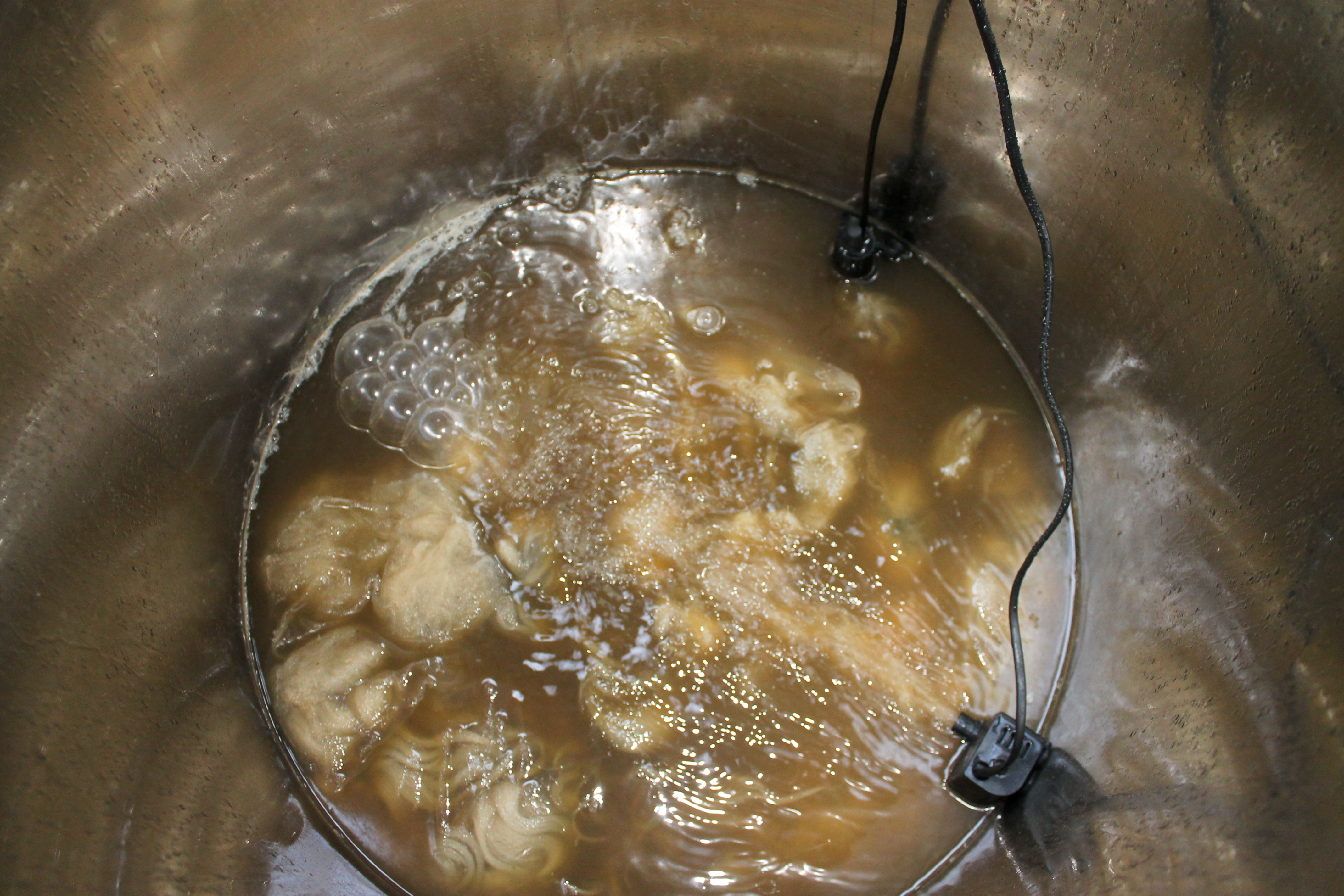
4. Check the bath: the liquid becomes darker and develops a strong smell. A thin dark foam layer may form on the surface. If the water is gently disturbed, small bubbles can appear. These signs indicate that the wool is ready to be removed.
5. Gently remove the wool without squeezing or stirring the bath.
6. Rinse fibres in clean water (rainwater preferred) to remove residues.
7. Dry in a ventilated area, avoiding direct sunlight.
Gallery
Conclusion
The DIY setup acts as a semi-closed, temperature-controlled system and consists of:
- Tank (HDPE or stainless steel) with lid
- Cheesecloth/old pillow/piece of fabric to contain the wool and allow easy removal
- Aquarium thermostat sized according to the tank volume (example)
- Aquarium pump that makes bubbles (example)
Once fully dry, the wool is clean and ready for use. It can be further rinsed depending on the intended application, or used as is.
The process was tested in the lab, where nearly 10 kg of wool were successfully washed in a 200 L tank.