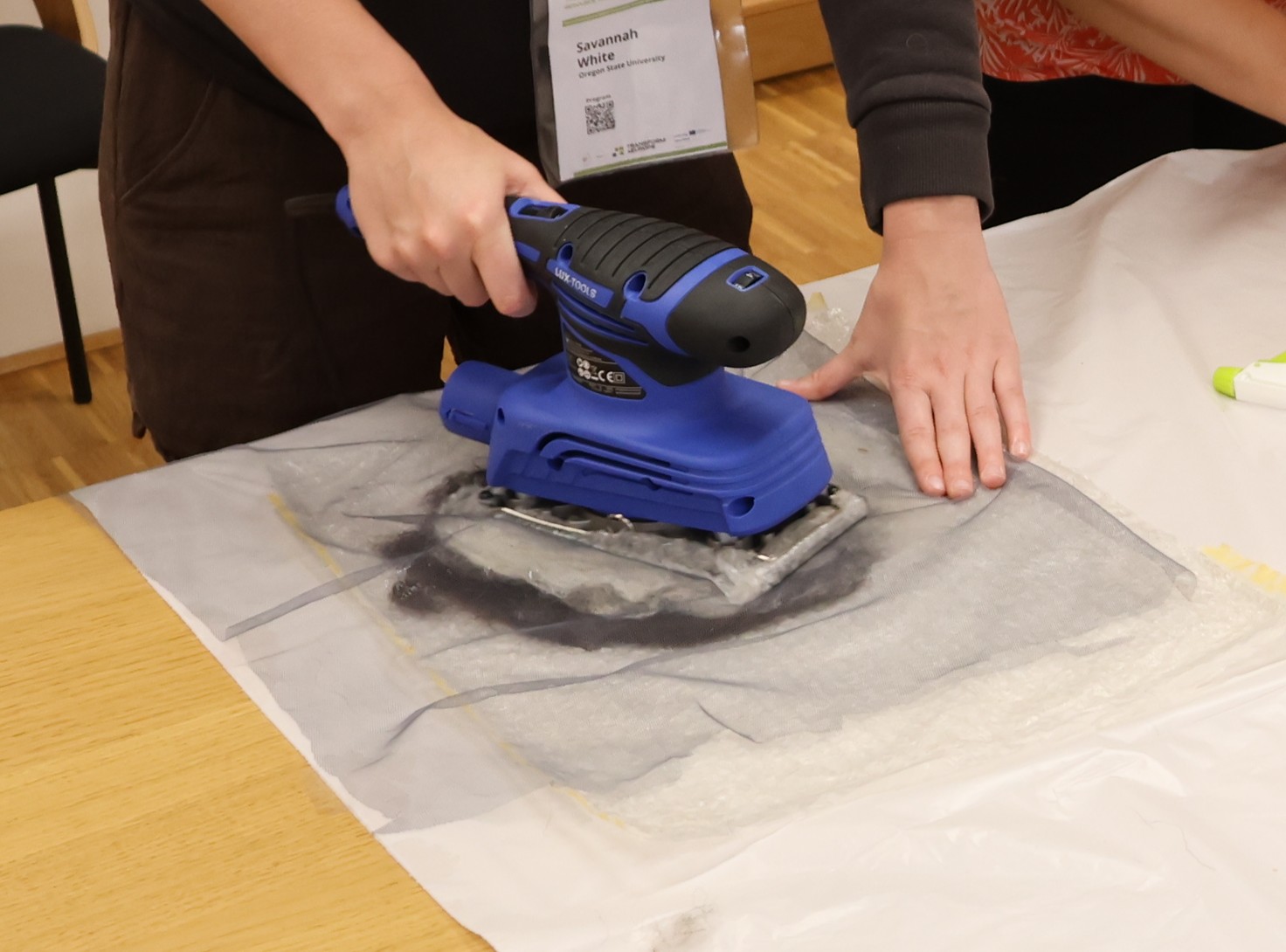
Sanding machine used to pre-felt local wool
The natural structure of woollen fibres enables felting, where the presence of warm water and soap (causing pH change) together with aggitation/rubbing causes the scales of fibres to entangle. This method produces strong, non-woven material called felt. The process can be divided into two phases - felting or pre-felt and fulling. A sanding machine (normally used for DIY projects) can be successfully used in the first process to achieve quicker interlocking of the fibres. This method is particularly useful for felting very thin woollen layers.
Input materials
- sanding machine
- bubble wrap
- tulle/ mesh fabric
- spray bottle or sponge
- towel
- bubble wrap
- tulle/ mesh fabric
- spray bottle or sponge
- towel
Ingredients
- carded wool fibres
- solid soap or washing up liquid
- warm water
- solid soap or washing up liquid
- warm water
How to
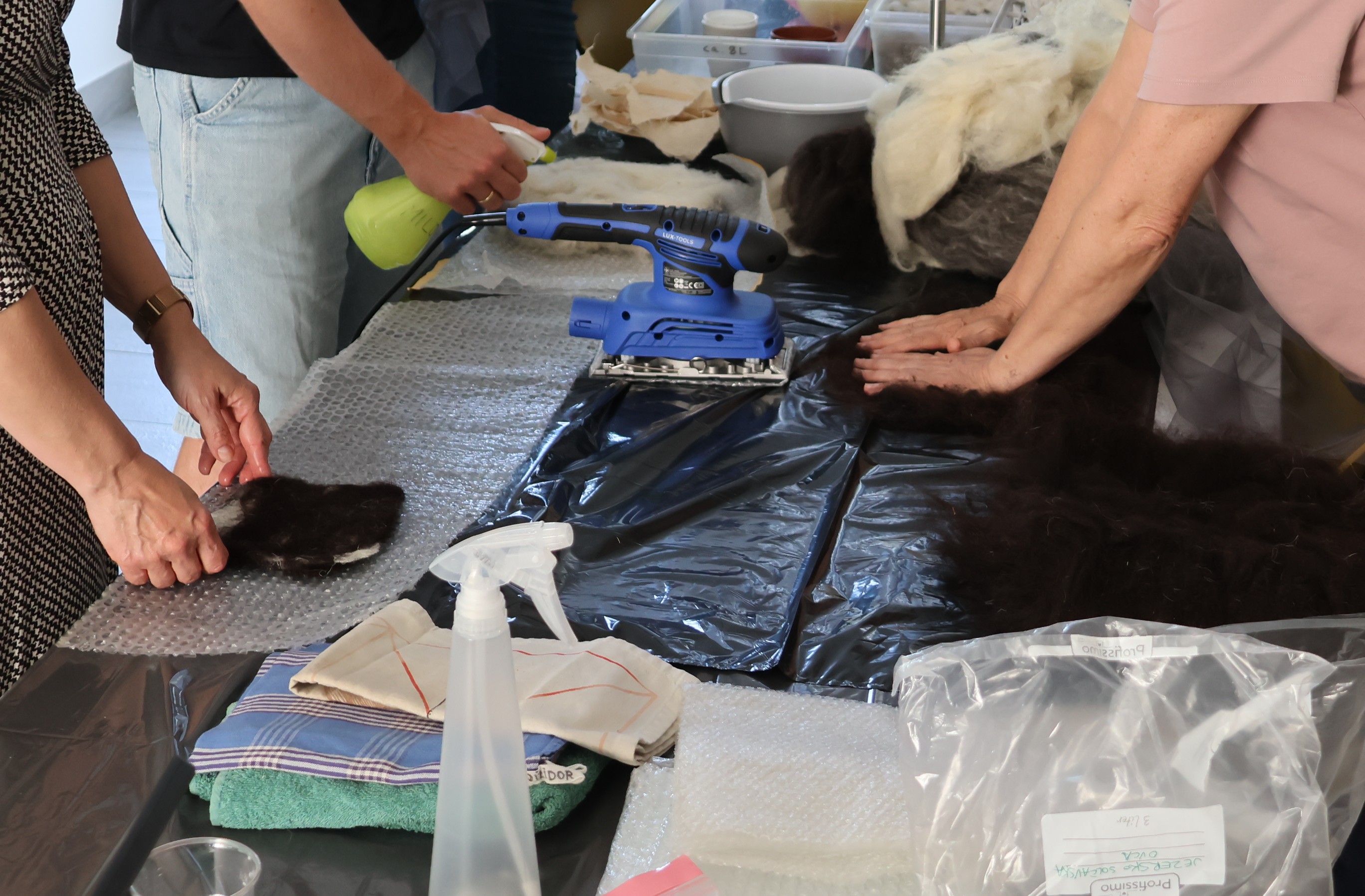
1. Pull carded wool apart to get thin layers. Lay the fibers in even rows on top of a sheet of bubble wrap. They should all be facing the same direction. When starting a new row, overlap the fibers slightly to ensure an even coverage. Once you have your fiber laid out in one direction, add another layer of fiber on top, facing the opposite direction - 90 degrees angle.
2. Mix together hot water and grated soap or washing up liquid. Cover the fibers with the mesh fabric and spray it with the soapy water. You can use a sponge and either squeeze out the water onto the mesh or gently press the wet sponge into the fibers.
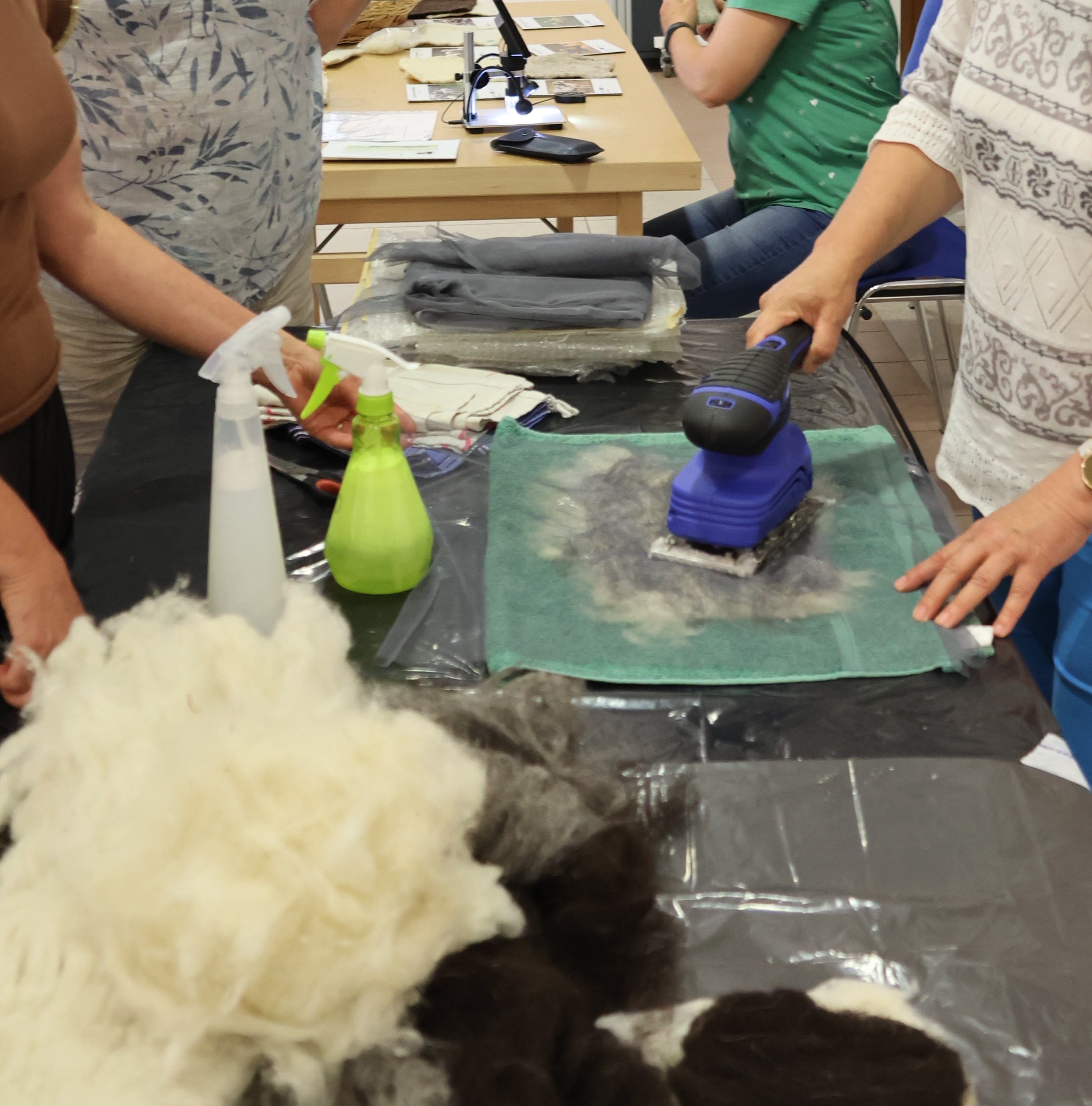
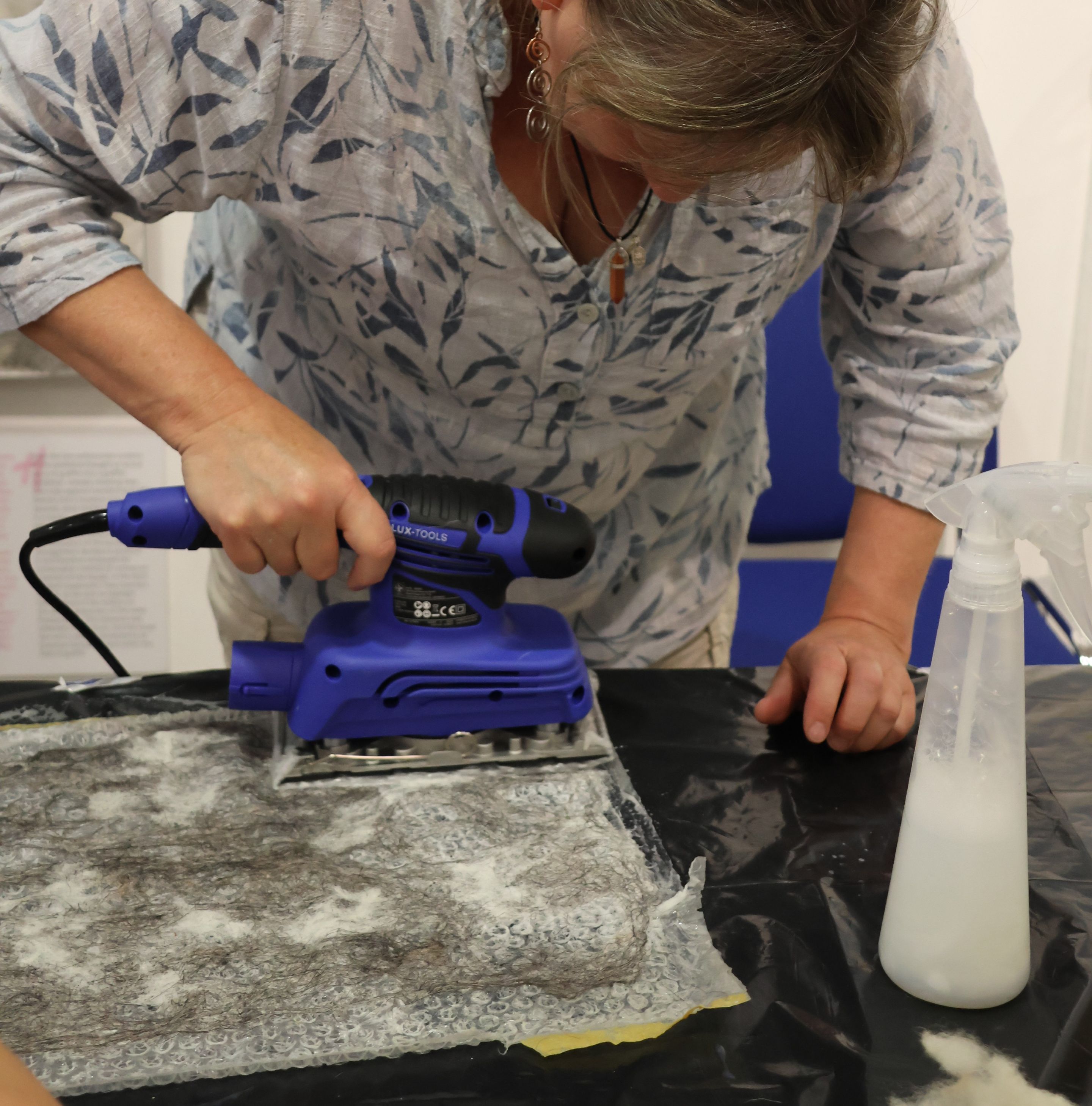
3. Protect the bottom of the sanding machine by covering it with a fitted and secured piece of bubble wrap. Place the sanding machine on top of the wet soapy wool and start the machine. Move the sander slowly across the surface, lingering on each spot for 5-10 s before moving onto another spot.
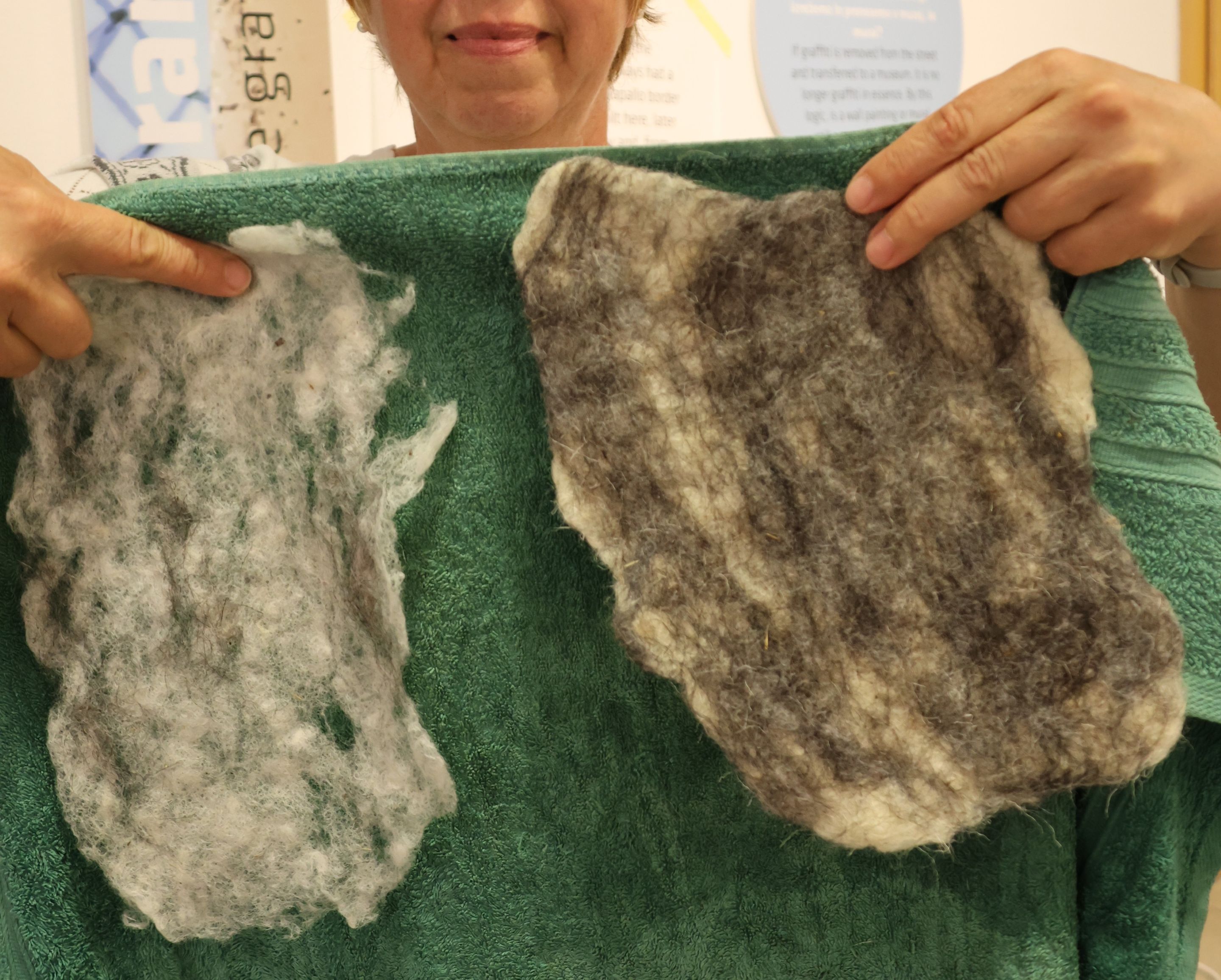
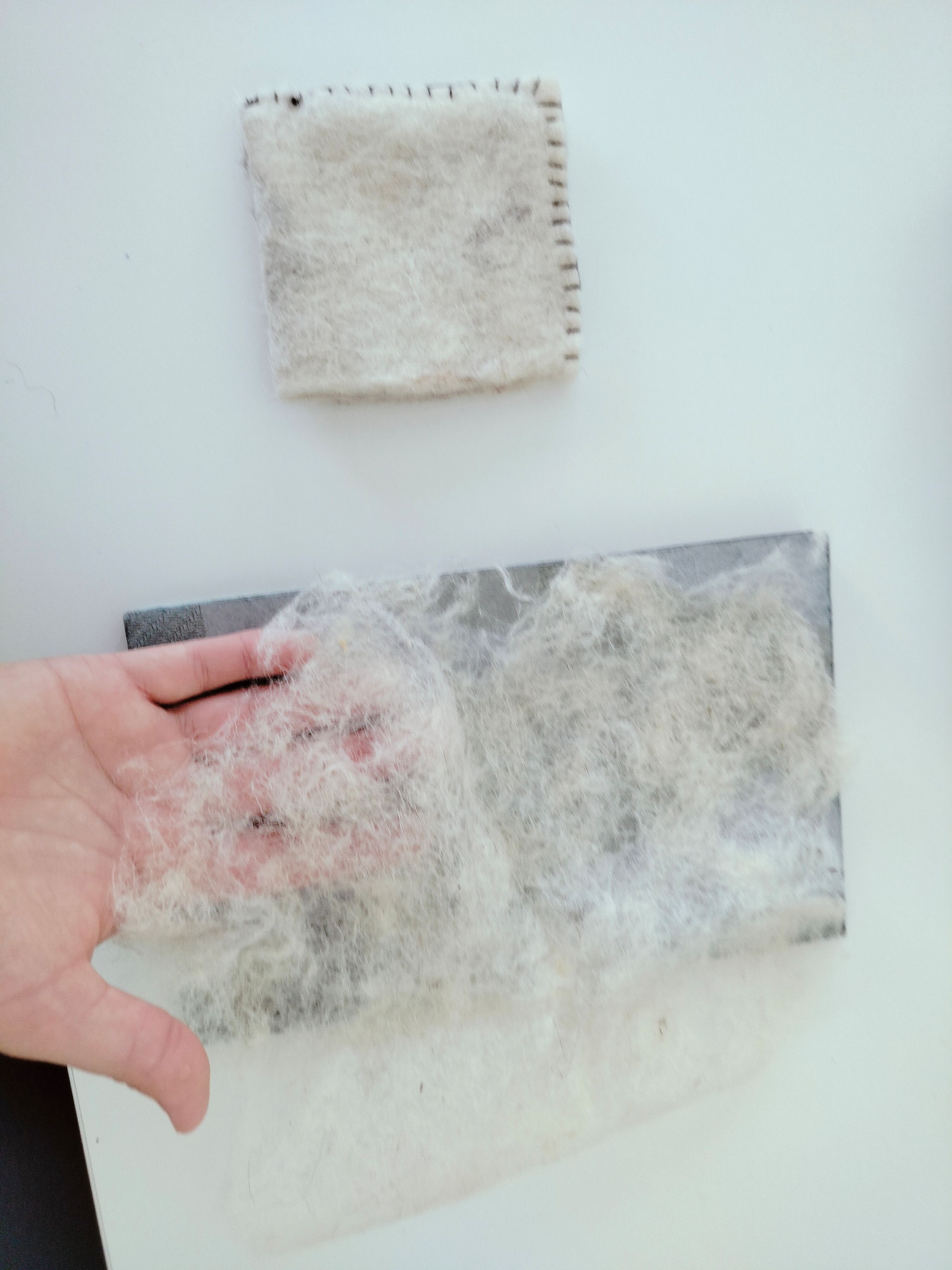
4. Once the wool surface looks more compacted, lift the mesh fabric and perform a pinch test. You pinch the wool felt and feel whether it’s still just fibers or the fibers are coming up as a single piece of felt. If when you try to pinch it you pull up fibers, it’s not quite ready for the fulling stage so keep with the light felting stage until your felt passes the pinch test.
5. Once you are satisfied with your pre-felt, you can start fulling the fabric by rolling it and kneading it energetically in all directions, which ensures even shrinking. Wool felt usually shrinks by 20-50% in this stage.
Gallery
Conclusion
Good quality solid soap is kinder for your hands. Depending on the electrical installation layout of your workshop, it might be easier to use a cordless sanding machine.
Low-tech Criteria
Simplicity1
Efficiency5
Durability4
Maintainability5
Ease of use5
Local3