Biocomposites Fabrication
Wool and natural binders for new materials
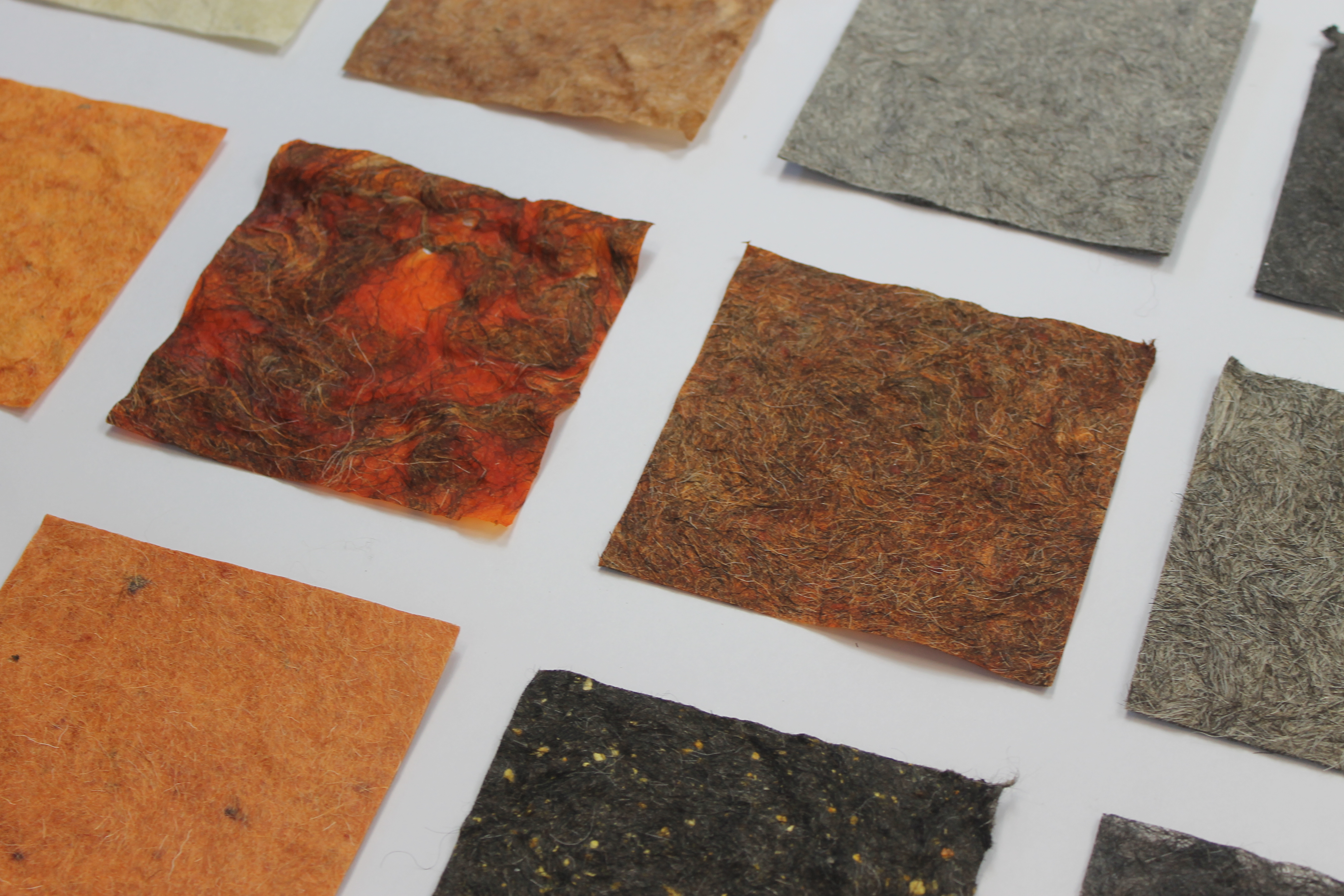
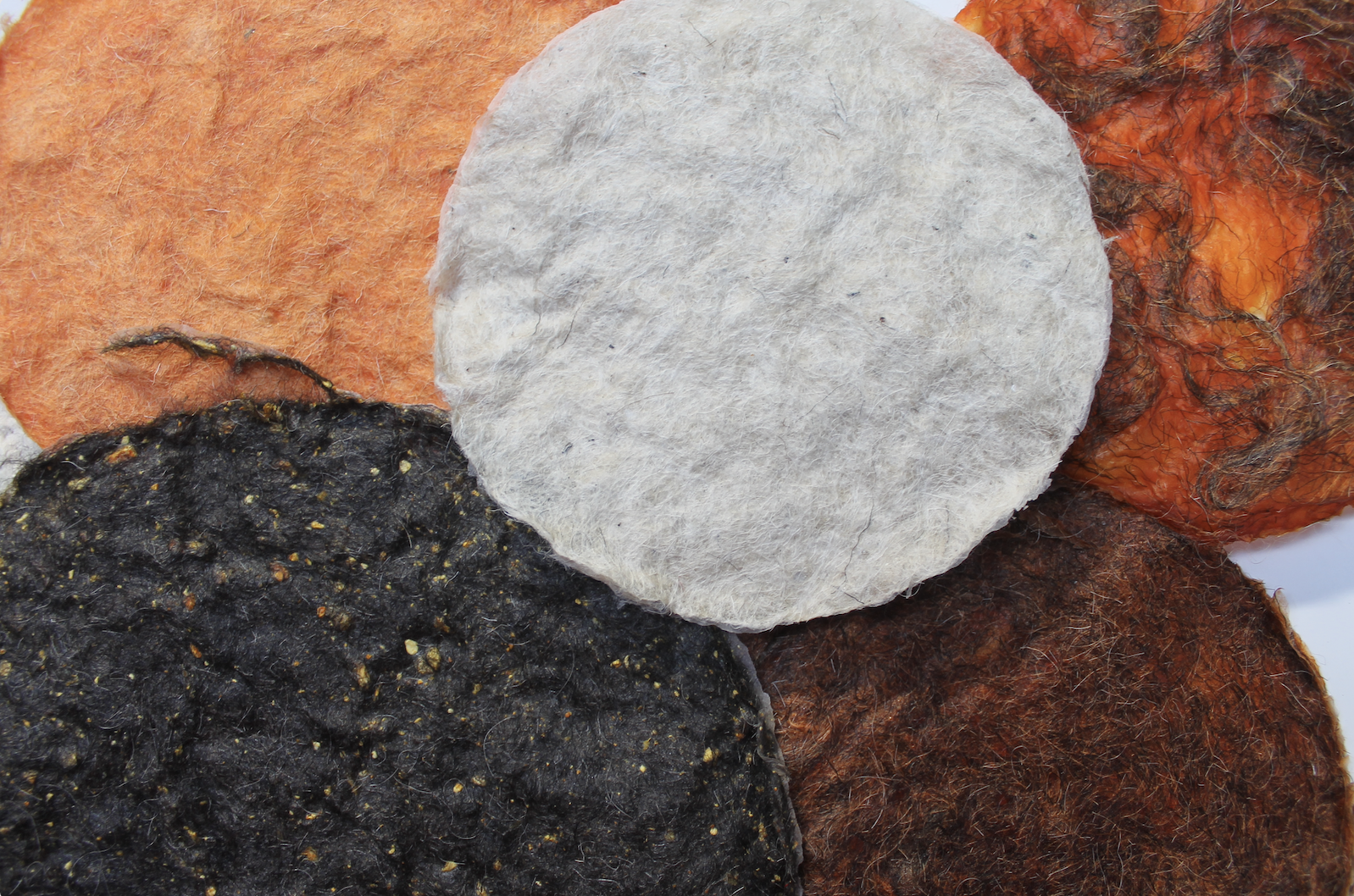
Biocomposites are materials made by combining a natural fibrous component with a biodegradable binding matrix, such as alginate, starch, pectin, cellulose-based binders, or plant gums. In this case, wool acts as the reinforcing phase, while natural binders provide cohesion and shape.
This approach allows wool to move beyond its traditional use in yarns and fabrics, and to be investigated as a raw material for material design, packaging, insulation, acoustic panels, or experimental surfaces.
Wool is particularly suitable for this exploration because of its inherent properties: resilience, elasticity, hygroscopic behavior, thermal regulation, and its natural compatibility with other biopolymers.
How to
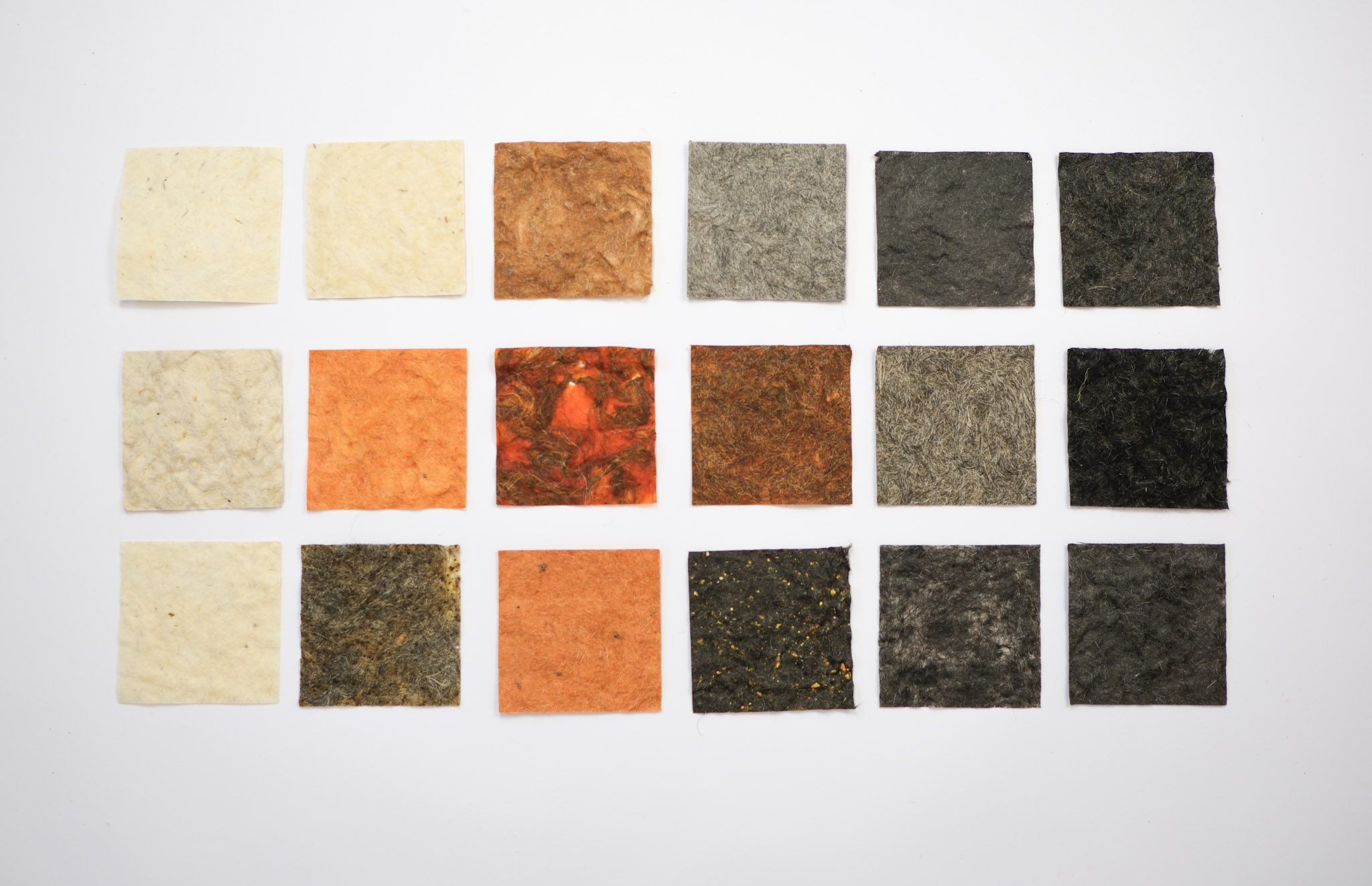
Biocomposite fabrication is similar to cooking: it involves following a recipe and experimenting with different ingredients and proportions. In the lab, we explored a variety of materials and combinations using wool. All the tested recipes are available in the Biomaterials Cookbook.
Gallery
Conclusion
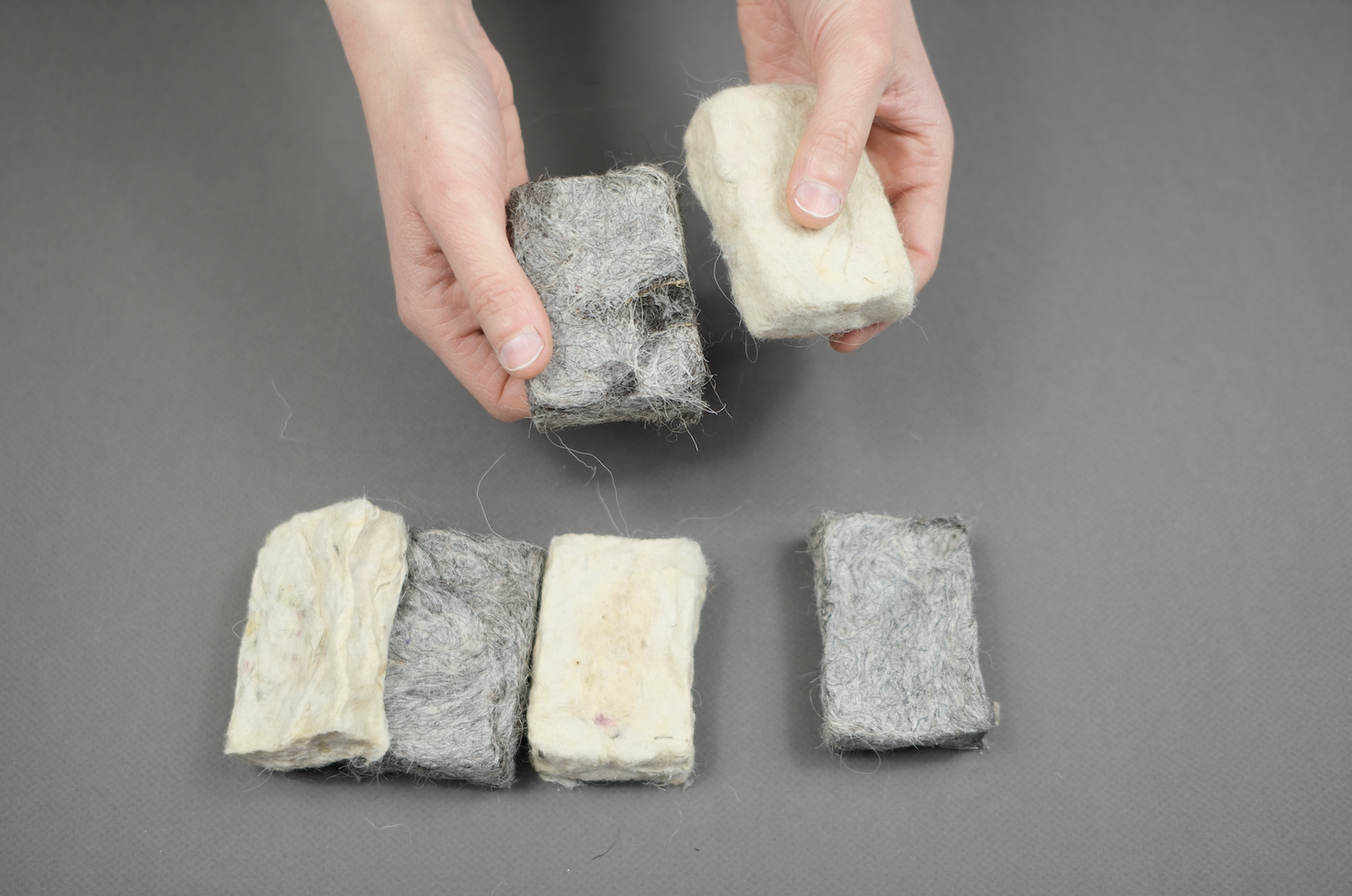
Biocomposite fabrication can be a valuable example of collective learning within a lab or community setting, depending on the selected recipe and materials. A replicable model using alginate and wool is available, offering participants the opportunity to combine wool with a natural binder and explore potential new applications. All details are available here.
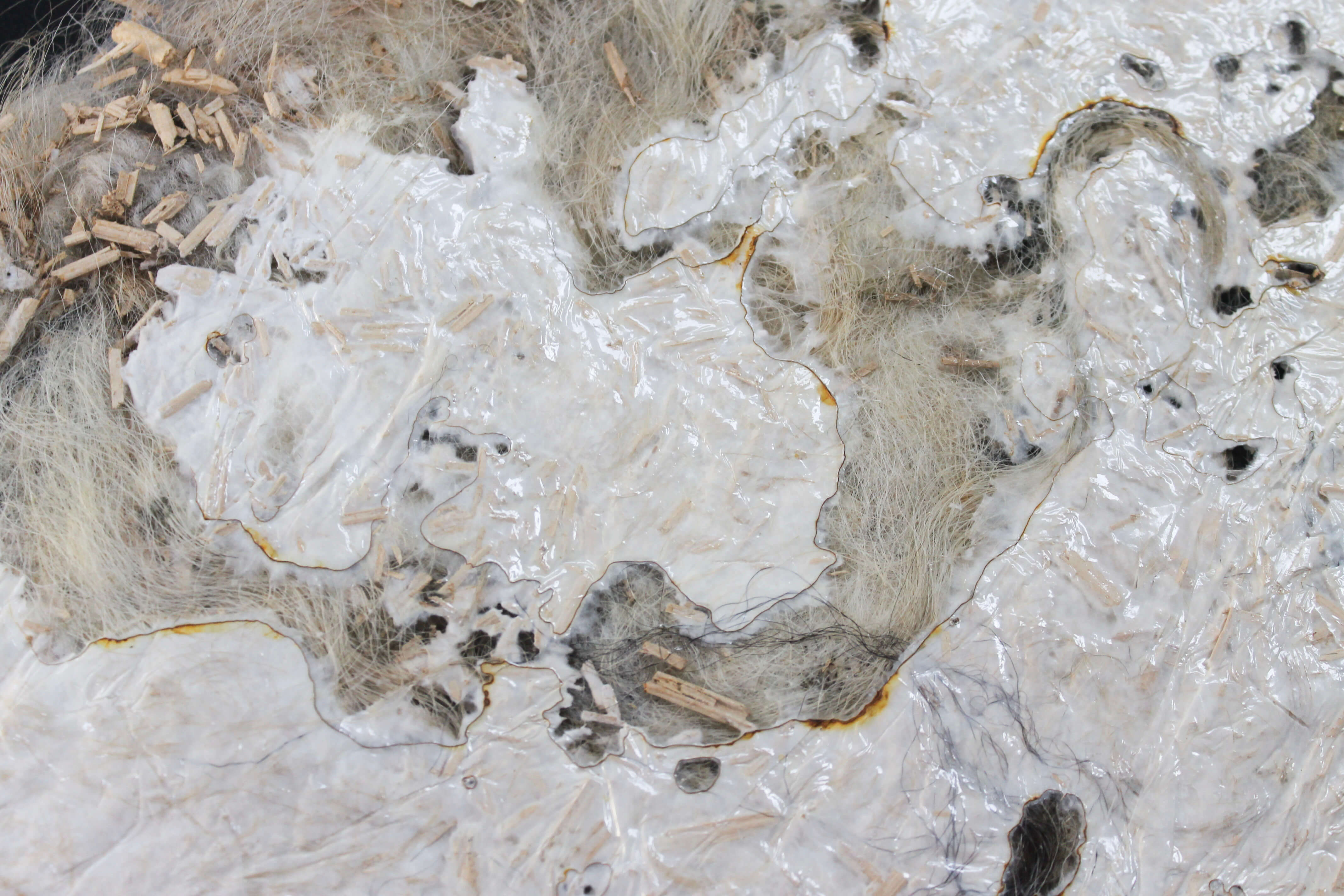
The outcomes of this research are not fixed products, but a series of material experiments and prototypes exploring the behavior of wool-based biocomposites under different formulations.
Detailed processes, recipes, and experimental notes are documented in the cookbook available here [xxx], which functions as an open and evolving technical extension of the project.
The outcomes of this research are not fixed products, but a series of material experiments and prototypes exploring the behavior of wool-based biocomposites under different formulations.
Detailed processes, recipes, and experimental notes are documented in the cookbook available here [xxx], which functions as an open and evolving technical extension of the project.
Low-tech Criteria
Simplicity3
Efficiency3
Durability3
Maintainability1
Ease of use4
Local4